Society Member
Participation in the intellectual and professional community surrounding the field.
 Applied Vitalism
A Developing Field of Health and Healing
The Science and Practice of Healing
by Natural Law
Applied Vitalism is the application of the Unified Laws of Vitalism to human health and healing.
The Laws describe how Vita, the vital life force, governs the living person: how vitality is generated, conserved and expended; the conditions upon which health depends; the influence of the inner life upon the body; the lawful origins of symptoms; and the processes through which symptoms resolve and healing proceeds.
Applied Vitalism brings that knowledge into practice.
The Axiom
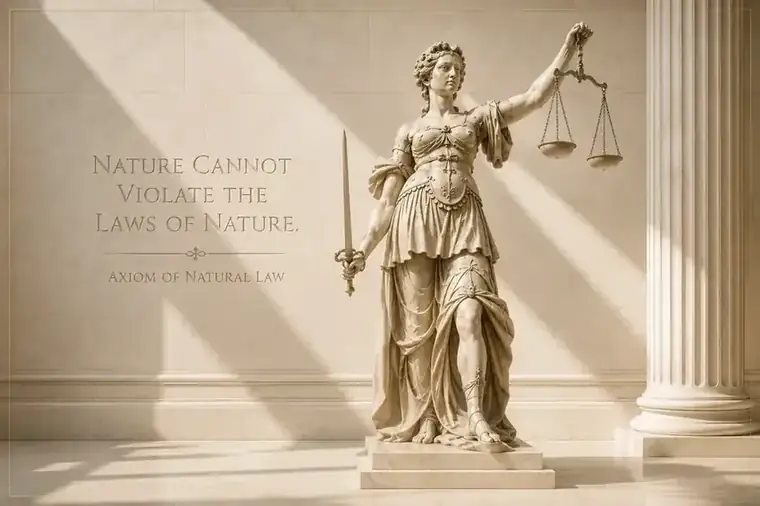
Nature cannot violate the laws of nature.The Axiom of Natural Law
A symptom has an origin. It has arisen through a process occurring within a living person under particular conditions and at a particular time. Applied Vitalism begins from the lawfulness of that process. The task is to determine what has occurred, why the symptom has arisen, what class of origin it belongs to, and where the person presently stands within the process.
The Unified Laws provide that framework. Once the laws governing life are stated, they change what can be known about health and disease.
They allow symptoms to be considered through their class of origin, the person's vitality and Vital Economy, the fulfillment of the Seven Vital Requirements, the influence of the inner life, and the phase of the process underway.
From that understanding comes the possibility of appropriate action. Care may require restoring what is deficient, removing what obstructs health, or supporting a process of resolution already underway.
This way of determining the nature and origin of a condition is Vitalistic Diagnosis.
Its purpose is practical: to know what is happening well enough to know what should be done.
The Unified Laws in Practice
The role of natural law and the Vital Life Force is made plain by a universally familiar example: the life of a plant.
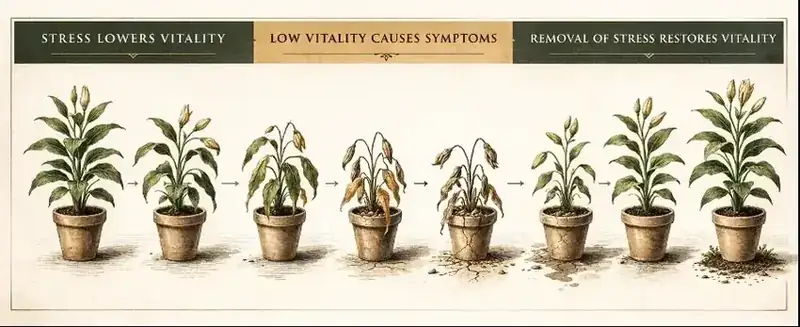
A plant has four Vital Requirements: sunlight, water, nourishment, and air with suitable temperature. Animals and human beings share those same four and have three additional requirements. Together they make up the Seven Vital Requirements of the Fourth Law, known in teaching as the Vital 7.
When those requirements are inadequately fulfilled, the plant devitalizes. Growth slows, leaves wilt, structure deteriorates, and vitality declines. The changes occur in an ordered progression directed from within the living plant by Vita, the vital intelligence described in the First Law.
The plant devitalizes by natural law, through the Vital Economy described in the Second Law. As available vitality and resources diminish, the plant conserves what remains and reduces the functions it can no longer adequately support. Restore its Vital Requirements while sufficient vitality remains and that same Vital Economy changes direction: repair resumes, structure strengthens, new growth appears, and the plant revitalizes.
In this example, the plant at the center of the sequence has no separate disease that must be found to account for its condition. It is devitalized. Its visible symptoms have arisen lawfully from insufficient fulfillment of the requirements of its life. This is symptom genesis, the subject of the Fifth Law.
Restore the conditions required by its nature and the symptoms resolve through the equally lawful process of revitalization, repair, and healing described by the Sixth Law.
Animals and human beings are governed by the same laws, with the additional influence of their mental and emotional life. The Third Law, the Law of the Living Person, describes the direct relationship between the inner life of the person and vitality. Mental and emotional states can therefore enter the process of symptom genesis under the Fifth Law, while acute shock or trauma can initiate a specific biological response whose resolution proceeds through the ordered sequence described by the Seventh Law, the Law of Trauma Healing Sequences.
The seven Laws can therefore be seen operating through the same continuous living process. Vita directs and coordinates. The Vital Economy governs the expenditure and conservation of vitality. The Vital Requirements establish the conditions upon which health depends. The inner life of the person influences vitality and biological function. Symptoms arise through lawful causes, and their resolution and healing proceed according to equally lawful processes.
Applied Vitalism brings these laws into the practice of health and healing. Human symptoms arise from one of four classes of origin: reaction, devitalization, revitalization, or trauma. Devitalization follows the principle plainly visible in the plant: insufficient fulfillment of the Seven Vital Requirements progressively diminishes vitality until symptoms appear.
Once the class and cause of a symptom are known, the requirements for its resolution become more knowable. What must then be determined is how the Seven Vital Requirements are to be restored and rebalanced, in what order, to what degree, at what time, and by what means in the particular person.
That is the art and science of Applied Vitalism.
Applied Vitalism may make use of the broad array of medical and alternative medical treatments, therapies, methods, and technologies that have developed and expanded across Western medicine. Their appropriate use is determined by the person, the origin and phase of the condition, the available vital reserve, the priorities of the Vital Economy, and what is required at that moment to preserve life, restore the conditions of health, remove obstacles to healing, and allow Vita to carry the processes of regulation, repair, restoration, and healing forward.
This is Vitalistic Diagnosis brought into practice: knowing what is occurring, why it is occurring, and what the laws of life require for its resolution.
Unification of
Modern conventional medicine has developed an extraordinary range of knowledge, therapies, technologies, and methods of influencing health. Alongside it, natural medicine has developed its own vast collection of therapies, remedies, diagnostics, and philosophies. The two schools are often at odds over how best to approach healing and disease, but the common ground is that both are approaching the same person, subject to the same natural laws of life. Once the laws are rightly considered, their mutual work upon the Vital Life Force can cease to be a source of contention, and the best of both can be put into action for the highest good of the patient.
Applied Vitalism places these resources within a common natural-law framework and relates their use to the needs of the particular living person.
An intervention can therefore be considered in relation to what produced the condition, the phase through which the person is passing, the vitality available to respond, and the likely effect of the intervention upon the process already underway.
This is what it means for care to be vitalistically informed.
The appropriate intervention may differ from person to person and from one phase of a condition to another. The method follows from the process being addressed, the condition of the person, and what the laws of life require at that time.
Applied Vitalism gives the professions of Western medicine a common natural-law framework through which to relate their knowledge and methods to the same living person.
The point of connection is the living person.
The Foundational Text
The Natural Law Basis for All Disease and Healing
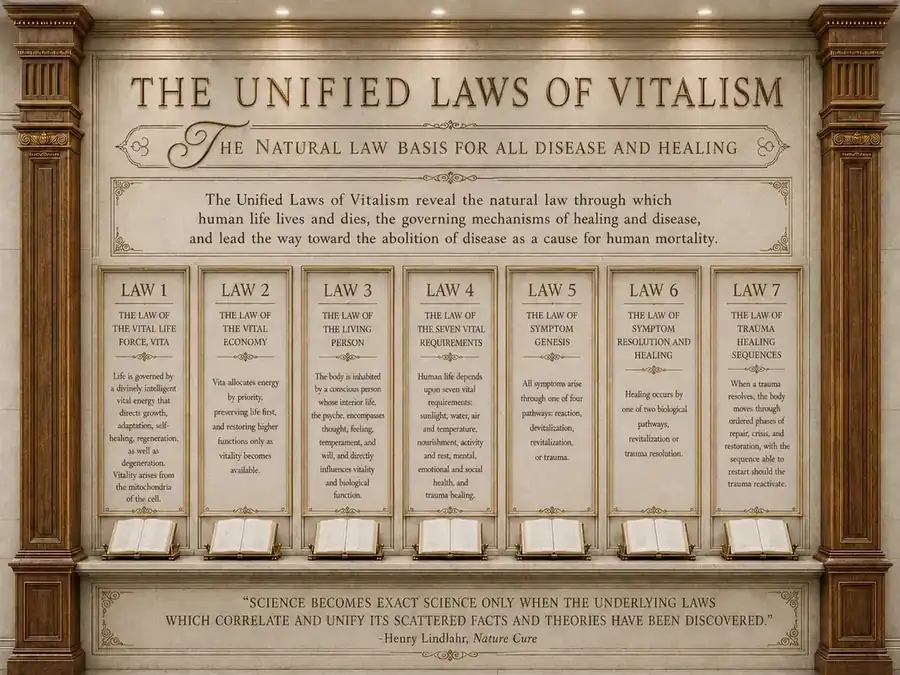
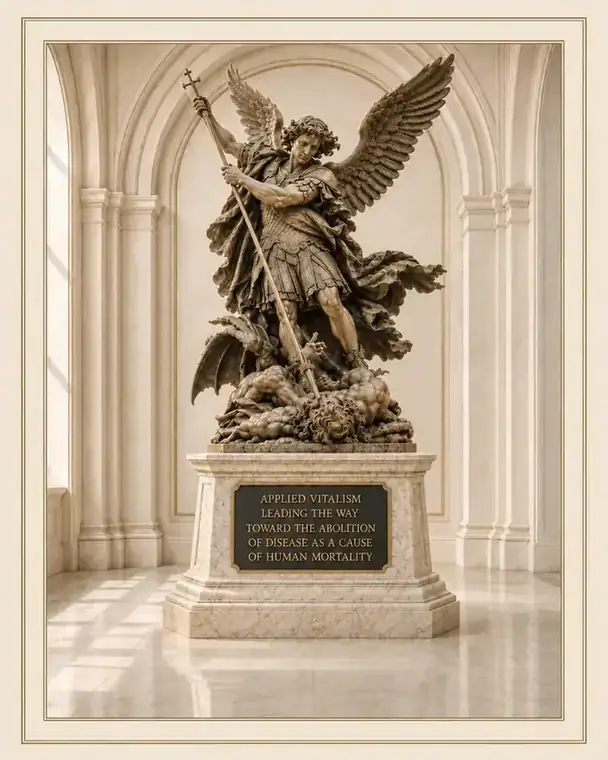
Derived from centuries of Vitalist researchers, practitioners, and writers, the seven Unified Laws of Vitalism reveal the natural law through which human life lives and dies, the governing mechanisms of healing and disease, and lead the way toward the abolition of disease as a cause for human mortality.
This installation is planned for the Institute of Vitalism and depicts the abbreviated summaries of each of the laws. The full canonical text is set out in the book The Unified Laws of Vitalism, together with an exposition of each Law.
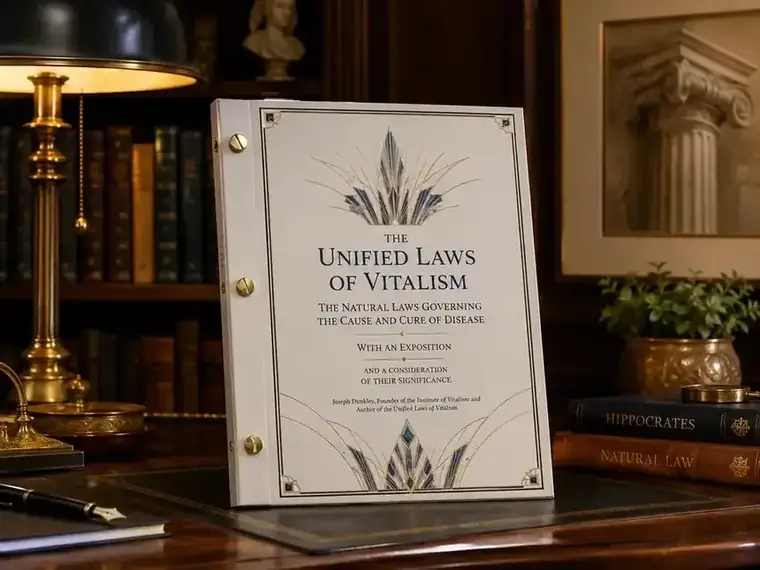
The book is presently issued in a private press edition and is not yet publicly available. Clients of Valeo Therapeutics hold copies of this first edition. Wider publication is planned for 2027.
The canonical text is written by Joseph Dunkley and held and developed by the Institute of Vitalism.
The Professional Field
Applied Vitalism gives practitioners across the health professions a common natural-law framework through which to understand the living person and apply the knowledge and methods of their own disciplines within the scope and standards of their profession.
What distinguishes Applied Vitalism is the way the practitioner reasons from the laws governing life: what process is occurring and how it arose; what Vita and the Vital Economy are doing under the conditions present; and what the person requires for resolution and healing.
Practitioners may therefore work through very different disciplines and methods while sharing the same natural-law understanding of the person before them.
Practice within the field also requires standards. Vitalistically informed care respects professional scope, responsible referral, and ethical clinical judgment, with particular care in the interpretation of symptoms, trauma, and healing processes.
These standards provide the boundaries within which the field can develop while leaving room for different professions, investigation, disagreement, and continuing refinement.
International Society of Applied Vitalism
The International Society of Applied Vitalism provides the professional and scholarly community through which people can enter the field, practice within it, and contribute to its development.
Participation in the intellectual and professional community surrounding the field.
For health professionals who bring Applied Vitalism into their existing lawful practice and undertake the orientation and standards appropriate to that responsibility.
Recognition for substantial contribution to the scholarship, clinical understanding, research, or development of the field.
Through the Society, clinical observations and questions can move from practice into the larger work of the Institute of Vitalism, while developing research, standards, and scholarship return to the practitioners working within the field.
In this way Applied Vitalism is developed by the people working within it.
The Society is presently being established. Membership will open as that work is completed, and the terms of participation will be published here.
Valeo
Valeo Therapeutics is the first clinical practice established explicitly upon the principles of Applied Vitalism and serves as an early setting in which the framework can be applied to the circumstances of individual people.
The future nonprofit Valeo Center for Applied Vitalism is intended to extend this work into a multidisciplinary setting in which physicians and other vitalistically informed health professionals can work together with serious and life-threatening conditions, using the medical and therapeutic resources appropriate to each person while contributing clinical questions and observations to the continuing development of the field.
Valeo is an early clinical expression of Applied Vitalism within a field intended to be practiced and developed by a broad professional community.
The Great Work
Applied Vitalism is being developed under the intellectual stewardship of the Institute of Vitalism through the continuing examination of the Unified Laws, contemporary scientific research, clinical observation, and the work of practitioners throughout the field.
The Institute, the International Society of Applied Vitalism, and the Journal of the Institute of Vitalism provide the institutional structure through which that work can accumulate, be challenged, and be carried forward by others.
The long-range horizon follows from the same premise with which Applied Vitalism begins: life, health, disease, adaptation, repair, and healing occur according to natural law. As those laws and processes become more completely understood, the possibilities of prevention, more precise intervention, and recovery increase with them.
The Great Work of the Institute is directed toward the abolition of disease as a cause of human mortality.
It is a scientific, clinical, and generational undertaking.
Applied Vitalism is the science and practice of healing by natural law.